
Why Strong Brands Win in the Age of AI
It’s nearly impossible to ignore AI these days. Every new app seems to be “powered by AI.” Every software platform claims to have the smartest AI on the market. And each one promises to completely transform the way you run your business. Before long, finding the “right” AI tool starts to feel a little like chasing squirrels. Every time you think you’ve found “the one,” another shiny option comes racing by.
But despite the hype, AI is still a relatively new technology. Yes, it’s evolving at an incredible pace, but it’s still a long way from the do-it-all solution it's often marketed as.
The biggest misconception about AI is that it can do the thinking for us. It can’t.
There is simply no substitute for human judgment, creativity, and emotional intelligence. Those are the things that shape memorable brands, solve complex problems, and build meaningful relationships with customers and team members.
That doesn’t mean that AI has no place in your business. Quite the opposite, actually! When viewed as a tool rather than a replacement for people, AI can help reduce friction, streamline repetitive work, and make workflow more efficient. The challenge is knowing where it adds value and how to use it without sacrificing what makes your brand work.
AI Should Amplify Thinking—Not Replace It
AI is good at recognizing patterns and producing content based on what it's learned. What it can't do is develop a brand strategy, understand your customers on a human level, or make judgment calls rooted in experience. It doesn't know why your customers choose you over a competitor. It can't identify the subtle emotional cues that shape a brand or recognize when design or messaging doesn’t fit the brand.
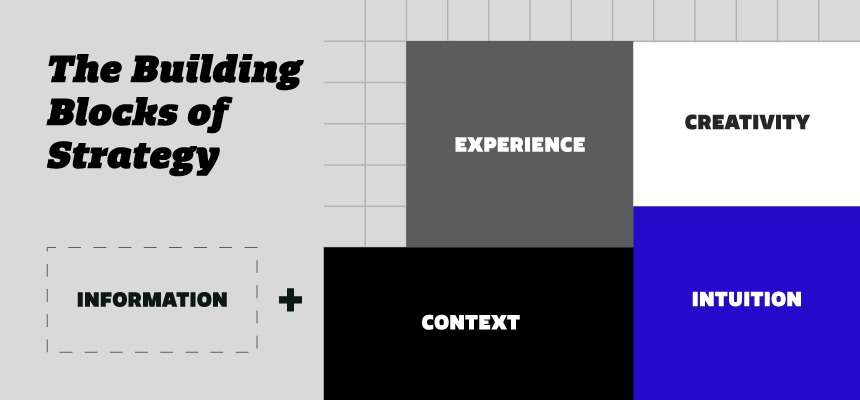
That's because strategy isn't built on information alone. It's built on context, intuition, creativity, and experience.
The creative process itself is an important part of thinking. Writing isn't just documenting ideas—it's often how ideas are discovered. And designing isn't simply arranging colors and shapes—it's a process of communicating meaning. When you skip those steps by asking AI to do all of the heavy lifting, you also skip many of the moments where your best ideas take shape.
Over time, relying on AI to think for you can have another unintended consequence: your own expertise stops growing. The more you delegate critical thinking, creative problem solving, and strategic decision-making to a machine, the fewer opportunities you have to refine your own acumen and deepen your ability to think outside the box.
That's ultimately what separates memorable brands from forgettable ones. Your value isn't found in how quickly you can produce content, but in your ability to tell meaningful stories and connect ideas in ways that no algorithm can. Because AI tends to magnify whatever already exists, a business with a clear brand strategy, a defined voice, and a deep understanding of its audience can use it to work more efficiently without sacrificing quality. A business without those foundations often ends up creating more content, more quickly, but not necessarily better (or even good) content.
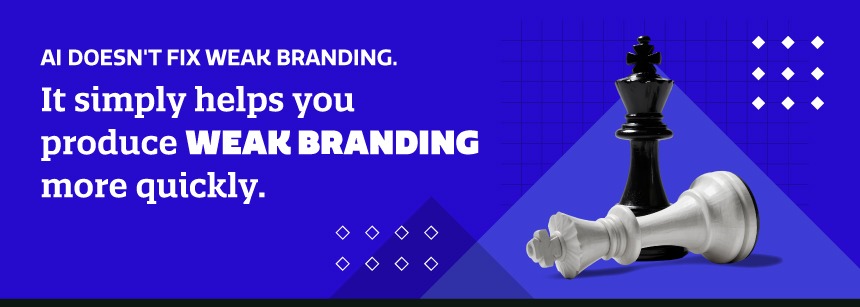
In other words, AI doesn't fix weak branding. It simply helps you produce weak branding more quickly.

Four Ways AI Can Hurt Your Business
Like any technology, AI isn't inherently good or bad. It’s a question of how you use it.
When implemented thoughtfully, AI can remove repetitive work and improve efficiency. But when it's adopted simply because everyone else is using it, or because it promises to be a shortcut, it can create new problems instead of solving existing ones.
Here are four of the most common mistakes businesses make when adopting AI.
1. It Becomes a Distraction Instead of a Solution
Every week seems to bring another AI platform claiming to be faster, smarter, or more powerful than the last. It's easy to fall into the habit of constantly testing new tools in search of the perfect solution.
The problem is that evaluating software takes time. Learning new interfaces takes time. Integrating platforms into your workflow takes time. Training your team takes time. Before you've fully adopted one platform, another appears promising to do everything even better, and the cycle begins again. Soon, the tools you’ve implemented to improve efficiency are doing the opposite.
Building an AI ecosystem that genuinely improves your business isn't something that happens overnight. The most successful implementations require months of refining workflows, documenting processes, training models, and teaching systems how your business operates. AI is only as useful as the information, processes, and guidance you provide it. If it doesn't create measurable value for your team or your customers, it's probably just another distraction.
2. It Creates Anxiety Instead of Support
For many employees, AI arrives with an uncomfortable question: Is this replacing me?
When businesses introduce new AI tools without explaining their purpose, uncertainty spreads quickly. Team members begin wondering how they’re expected to integrate these new systems and whether their roles are secure. Instead of improving productivity, AI undermines it. AI should never be introduced as a replacement for talented people. Your team is your business’ best cheerleaders, and if they lose confidence in the brand, your customers will feel it too.
Think of AI as a support layer beneath your existing processes. It can organize information, summarize research, automate repetitive administrative tasks, and help surface insights more quickly. Those capabilities free your team to spend more time honing their expertise, supporting your brand, and solving the kind of complex problems that no AI can tackle competently.
When your employees clearly understand why a tool is being introduced and how it makes their jobs easier, AI becomes something they can embrace instead of something they fear.

3. It Can Damage Customer Trust
It probably comes as no surprise that not everyone is excited about the rapid growth of AI.
According to the Pew Research Center, about half of U.S. adults say they feel more concerned than excited about the increasing use of AI in daily life, and a large majority (over 80%) believe it could have a negative impact on society. Whether or not those concerns change over time, they're important for businesses to recognize.
Customers are becoming better and better at clocking brands that rely heavily on AI-generated content. They notice generic messaging, awkward copy, and copycat design. That doesn't mean businesses should hide the fact that they use AI. It means they should use it responsibly. Otherwise, they risk alienating a large portion of their customer base.
If AI is supporting your team behind the scenes, that's one thing. But when customers begin feeling like every interaction is automated and every piece of content lacks authenticity, trust begins to erode, and trust is much harder to rebuild than it is to lose.
4. It Makes Your Brand Look Like Everyone Else's
If you’ve been paying attention to the larger AI conversation, you’ve likely heard the term “slop.” In fact, Merriam-Webster made “slop” their official Word of the Year in 2025.
So what is slop?
“Slop” is AI-generated output that clearly lacks any personality or authenticity, often with noticeably poor design (can we get some negative space, please?) and copy that reads like it was generated by, well, a robot. Slop doesn’t leave a lasting impression because it doesn’t communicate anything unique.
This isn't necessarily because AI is “bad.” It's because generative AI learns from enormous collections of existing content. When thousands of businesses ask similar questions using similar prompts, they're drawing from many of the same patterns and references. The result is content that often begins to look and sound remarkably similar.
You've probably already noticed it.
Scroll through your social media feed, and you'll likely see familiar layouts, nearly identical illustration styles and icons, similar color palettes, and captions that all seem to follow the same formula.
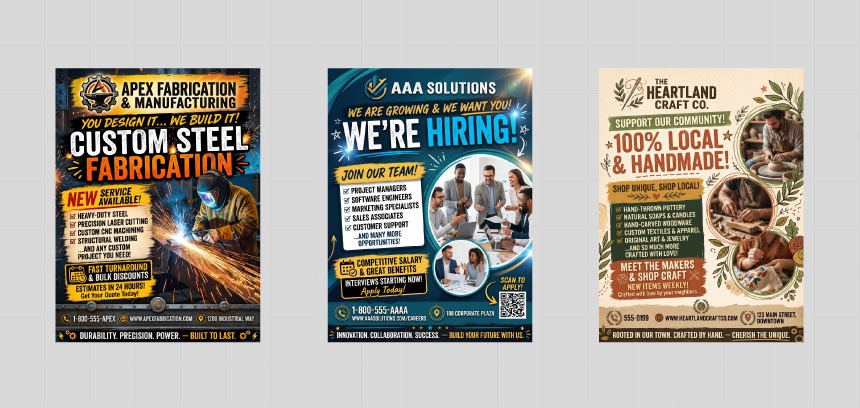
Pumping out AI slop is basically speedrunning your brand into the ground.
Your brand should communicate what makes you different, and a healthy brand does this in dozens of ways, both obvious and nuanced. If your website, social media, advertisements, and marketing materials could just as easily belong to ten other companies in your industry, you've lost grip on owning a competitive advantage.
This is also why having a strong brand foundation matters so much. AI can only build from what you give it. If your visual identity, messaging, tone of voice, and brand strategy aren't clearly defined, AI has very little to work with beyond generic patterns. On the other hand, when your brand is already distinctive, AI becomes much better at helping you create content that feels aligned and consistent.

AI Works Best When Your Brand Already Does
By now, you might be wondering if we're telling you to avoid AI altogether. But despite the disclaimers, we promise we’re not!
In fact, AI tools can be an incredibly valuable addition to your business. The key is understanding that it works best when it's supporting a brand that's already built on a strong foundation. You can’t depend on AI to create brand differentiation, but you can use it as a tool to amplify what’s already there.
If your business has a clearly defined brand identity, a distinct voice, consistent messaging, and a carefully crafted visual identity, AI can help you execute various touchpoints more efficiently and with consistency.
But AI can't create those things from scratch.
It doesn't know why customers choose your business over a competitor. It doesn't understand the personality behind your brand or the nuances of your messaging. It can't evolve strategy and identity as your business scales.
Think of your brand as the blueprint and AI as the power tools. A power drill can help you build faster than a screwdriver, but it can't tell you why behind what you’re building. And no matter how good it is at drilling holes, it can’t make the walls stay up if there’s no foundation.
That's why investing in your brand needs to come first. Your positioning, messaging, voice, tone, visual identity, and design system all become the inputs that allow AI to produce content that's actually useful.
Where AI Actually Adds Value
After all that, let's give AI the credit it deserves.
AI isn't just a generator of generic content. Used thoughtfully, it's remarkably good at handling the kinds of work that slow teams down without requiring significant creative or strategic judgment.
Some of its greatest strengths include:
- Synthesizing and reviewing large amounts of information. Whether it's reviewing customer feedback, summarizing reports, copyediting text or distilling lengthy documents, AI can quickly identify main takeaways and catch errors that may have slipped through the cracks.
- Spotting patterns and trends. AI can analyze data sets, recurring themes, or customer behaviors much faster than a person working manually, making it easier to uncover insights worth exploring.
- Creating first drafts. Staring at a blank page is rarely productive. AI can help brainstorm and create initial drafts that your team can then refine and strengthen.
- Organizing research. Instead of sorting through scattered notes and documents, AI can help categorize information, create outlines, and make large amounts of data more manageable.
- Summarizing meetings and emails. Rather than spending valuable time writing detailed recaps, AI can organize meeting notes and long email threads into clear summaries and action items.
- Automating repetitive workflows. Routine administrative work—like categorizing information, formatting documents, or generating recurring reports—is where AI often delivers some of its biggest efficiency gains.
- Comparing options. AI can quickly evaluate multiple versions of messaging, identify differences between documents, or help organize pros and cons when you're weighing decisions.
- Finding gaps in your strategy. AI can surface inconsistencies, identify unanswered questions, or highlight areas that deserve additional attention.
The common thread? These tasks all involve processing, organizing, or accelerating information—not replacing strategic thinking.
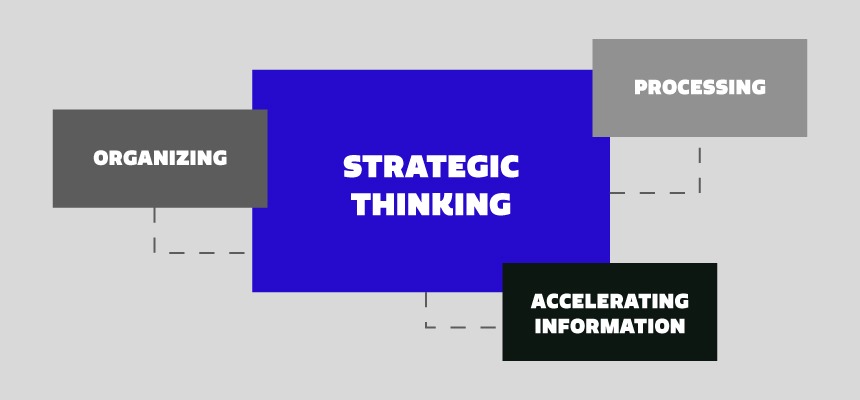
When you combine AI's ability to process information at incredible speed with human judgment, the outcome can be stronger than either could achieve alone. AI tools can help you work more efficiently and uncover data-based insights, while humans provide the context, direction, and critical thinking needed to turn those insights into something useful and meaningful.

Stop Looking for the “Best” AI Tool
Every AI company pitching you their tools and platforms will tell you they’re the best (and of course, every one of them would like your monthly subscription). But in reality, there isn’t a single “best” AI tool.
Instead of asking, “What's the best AI tool?” ask questions that are rooted in your brand strategy instead of the technology.
- Does this tool support our business goals?
- Will it improve the experience we deliver to our customers?
- Does it reduce friction for our team?
- Does it do something different from the tools we already have?
- Where in our workflow could this save time?
Most businesses don't need a dozen AI subscriptions. They need one or two thoughtfully chosen tools that integrate well with their existing workflows and solve real problems (or they don’t need any at all!).
Your Brand Should Highlight Your Greatest Competitive Advantage
AI isn't going anywhere, and neither is the conversation surrounding it. As the technology continues to evolve, there will always be another platform promising to transform the way you do business. Some of those tools will genuinely improve the way your team works. Others will fade as quickly as they appeared.
AI simply can’t create a successful brand. It can't define your purpose or your personality. It can’t uncover the unique things that differentiate you from the competition. It can’t build meaningful connections with your customers. And it certainly can't replace the creativity, judgment, and human connection behind work that truly resonates.
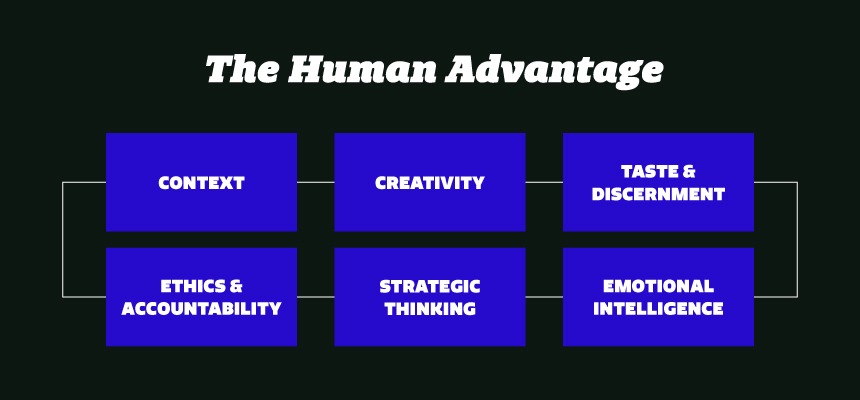
Human beings still provide the things that make a brand work:
- Context
- Creativity
- Taste and discernment
- Ethics and accountability
- Strategic thinking
- Emotional intelligence
As you evaluate AI tools for your business, don't ask how much of your work it can do for you. Ask how it can support the work that only you and your team can do. And remember: No matter how advanced AI becomes, your greatest competitive advantage isn't the technology you use. It's the human-powered relationships and creativity behind your brand experience.
Schedule a chat with a brand strategist today and find out how the (human) experts at Quill can help you build an unstoppable brand.


